
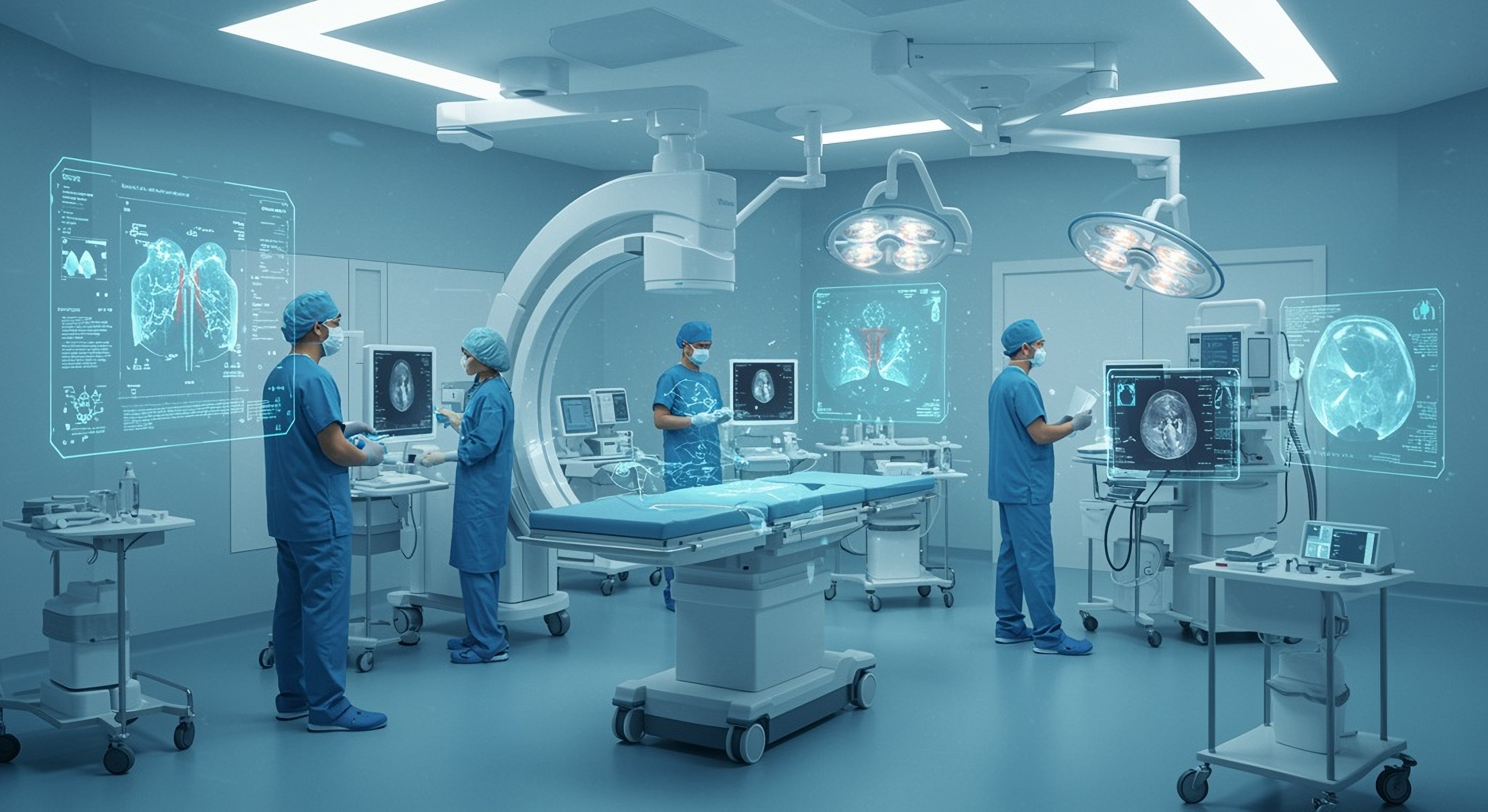
AI IN HEALTHCARE: FROM RADIOLOGY TO CRITICAL CARE
Artificial intelligence is no longer an experimental or future-facing concept in healthcare. It has already become a core component of modern clinical ecosystems, fundamentally transforming how hospitals operate, how clinicians make decisions, and how patient care is delivered across multiple specialties.
Today, healthcare systems are under increasing pressure due to rising patient volumes, workforce shortages, and the growing complexity of medical data. In this environment, artificial intelligence is emerging as a critical enabler of efficiency, accuracy, and early intervention—particularly in high-dependency areas such as radiology and intensive care.
Within this transformation, INTAK plays a key role with its AI-powered clinical solutions, including Meta4ICU, Meta4mammo, and Meta4thorax, designed to support clinicians across critical care and diagnostic imaging workflows.
AI in Radiology: Enhancing Diagnostic Precision
Radiology is one of the most advanced and widely adopted domains for artificial intelligence in healthcare. Medical imaging generates massive volumes of data daily, including X-rays, CT scans, and mammography images. The interpretation of these images requires high levels of expertise, concentration, and consistency.
AI-powered diagnostic systems are now being integrated into radiology workflows to support clinicians in detecting abnormalities faster and more accurately. These systems use advanced machine learning and deep learning algorithms trained on large datasets of annotated medical images.
In breast cancer screening, Meta4mammo acts as an intelligent decision-support tool, highlighting suspicious lesions that may be subtle or difficult to detect in early stages. This supports earlier diagnosis and significantly improves clinical outcomes.
Similarly, Meta4thorax supports chest imaging analysis by identifying potential indicators of lung cancer, pneumonia, and other thoracic conditions, helping radiologists prioritize urgent cases and reduce diagnostic workload.
AI in Critical Care: Real-Time Intelligence in the ICU
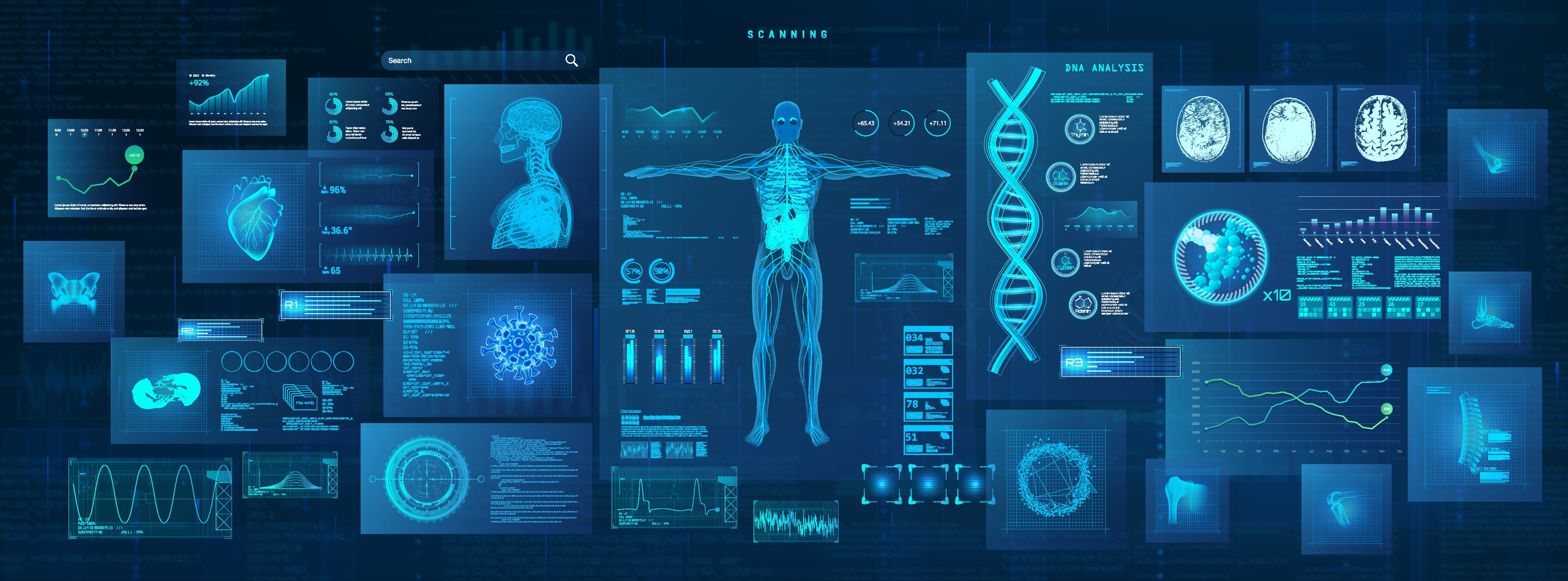
Intensive Care Units (ICUs) represent one of the most complex and data-intensive environments in any hospital. Patients in critical care are continuously monitored through multiple systems, generating real-time streams of physiological data including heart rate, blood pressure, oxygen saturation, ventilator settings, and laboratory results.
INTAK’s Meta4ICU solution is designed to bring intelligence into this highly dynamic environment by supporting real-time patient monitoring and early warning detection mechanisms.
AI-driven ICU systems continuously analyze patient data streams to identify early signs of clinical deterioration, such as sepsis risk, respiratory failure, or cardiovascular instability. These insights can emerge before visible symptoms become apparent to clinical staff, enabling earlier intervention and improved patient safety.
By transforming raw ICU data into actionable clinical intelligence, Meta4ICU supports clinicians in making faster and more informed decisions in time-critical environments.
From Data Overload to Clinical Intelligence
One of the biggest challenges in modern healthcare is not the lack of data, but the overwhelming volume of it. Hospitals generate vast amounts of structured and unstructured data every second, but much of this information remains underutilized.
Artificial intelligence plays a key role in transforming this raw data into actionable clinical intelligence. Within integrated environments such as those supported by INTAK systems, data from radiology (Meta4mammo, Meta4thorax), intensive care (Meta4ICU), electronic health records, and laboratory systems can be analyzed collectively.
This enables clinicians to move from reactive decision-making to proactive and predictive healthcare delivery, improving both efficiency and patient outcomes.
AI as a Clinical Augmentation Tool, Not a Replacement
Despite rapid technological advancements, the role of artificial intelligence in healthcare is not to replace clinicians. Instead, AI should be understood as an augmentation layer that enhances human expertise.
Clinicians bring contextual understanding, ethical judgment, and experience-based reasoning that cannot be replicated by algorithms. AI, on the other hand, excels at pattern recognition, large-scale data processing, and continuous monitoring without fatigue.
The Future: Toward Hybrid and Predictive Healthcare
The future of healthcare is moving toward predictive, preventive, and personalized medicine. In this model, AI will play a central role in identifying risks before they become critical, optimizing treatment pathways, and supporting continuous patient monitoring.
Hospitals will increasingly rely on integrated AI systems such as INTAK’s Meta4ICU, Meta4mammo, and Meta4thorax to support clinical decision-making across departments.
This shift enables earlier interventions, improved resource allocation, and better patient outcomes at scale.
Ultimately, the future of healthcare lies in hybrid intelligence—where clinical expertise and artificial intelligence work together seamlessly to deliver safer, faster, and more effective care.